SOP — HLT CIP
FUERST WIACEK Version 1.3 | Utilities — Hot Liquor Tank | Frequency: annual
Purpose
Due to the hardness of Berlin mains water, the Hot Liquor Tank (HLT) accumulates mineral deposits over time that can affect equipment function across the brewhouse, cellar, and packaging. The CIP uses acid (IC 3002) to dissolve calcium and mineral scale.
Frequency: once per year (annual maintenance). Schedule into planned downtime — the HLT must be drained and out of service for several hours, and reheating the tank afterwards is energy-intensive.
This SOP was previously a weekly task. It is now annual under current operating conditions. If the annual visual inspection reveals heavier-than-expected scale, raise the frequency and update this SOP.
PPE Required
Warning
Do not handle chemicals without full PPE.
- Safety goggles
- Chemical-resistant gloves
- Ear protection
Risks
| Hazard | Risk |
|---|---|
| Chemical exposure | Burns, eye damage / blinding |
| Working at height | Falls — use ladder carefully |
| Overflow | Tank overflow if valves set incorrectly |
| Foreign objects in tank | PPE or tools falling in — check before closing manway |
Equipment
- Mobile pump (cellar pump)
- Mobile dosing tank
- DN25 hoses × 2
- DN40 to DN25 reducer
- DN40 hose
- 2 L acid (IC 3002)
- Conductivity meter
- Ladder
- Wrench for manway
- Flashlight
- 45° and 90° fittings as needed to reduce hose stress
Process
1. Take HLT Offline
- In Botec, place the HLT visualisation into Stop mode (red square).
- Disable Unit active mode on the HLT.
- Turn off the power connection at the pump to prevent accidental activation during cleaning.
2. Isolate and Drain
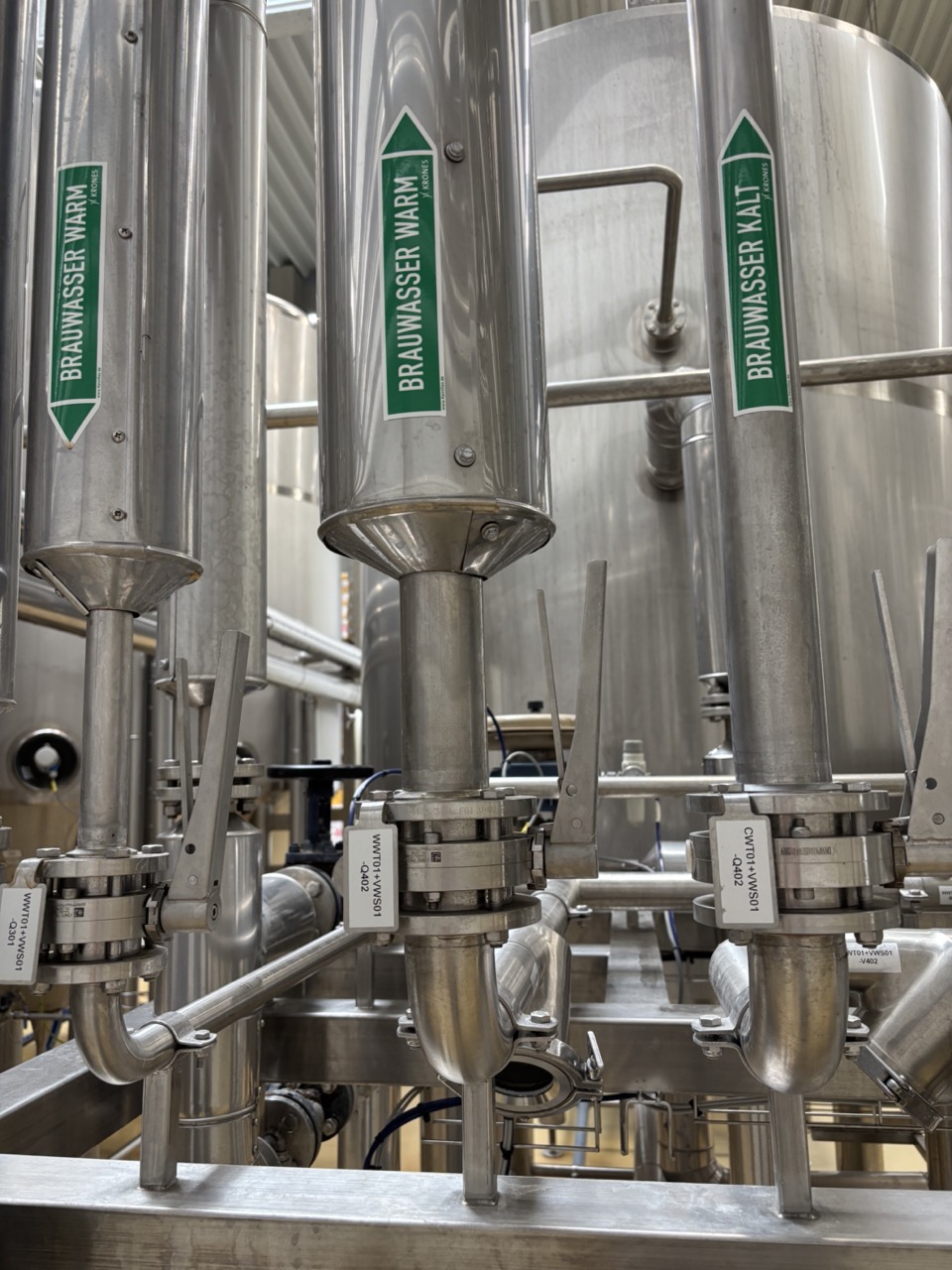
- Close the butterfly valve (WWT01+VWS01-Q402) after the filter — this prevents chemicals from entering the rest of the water network.
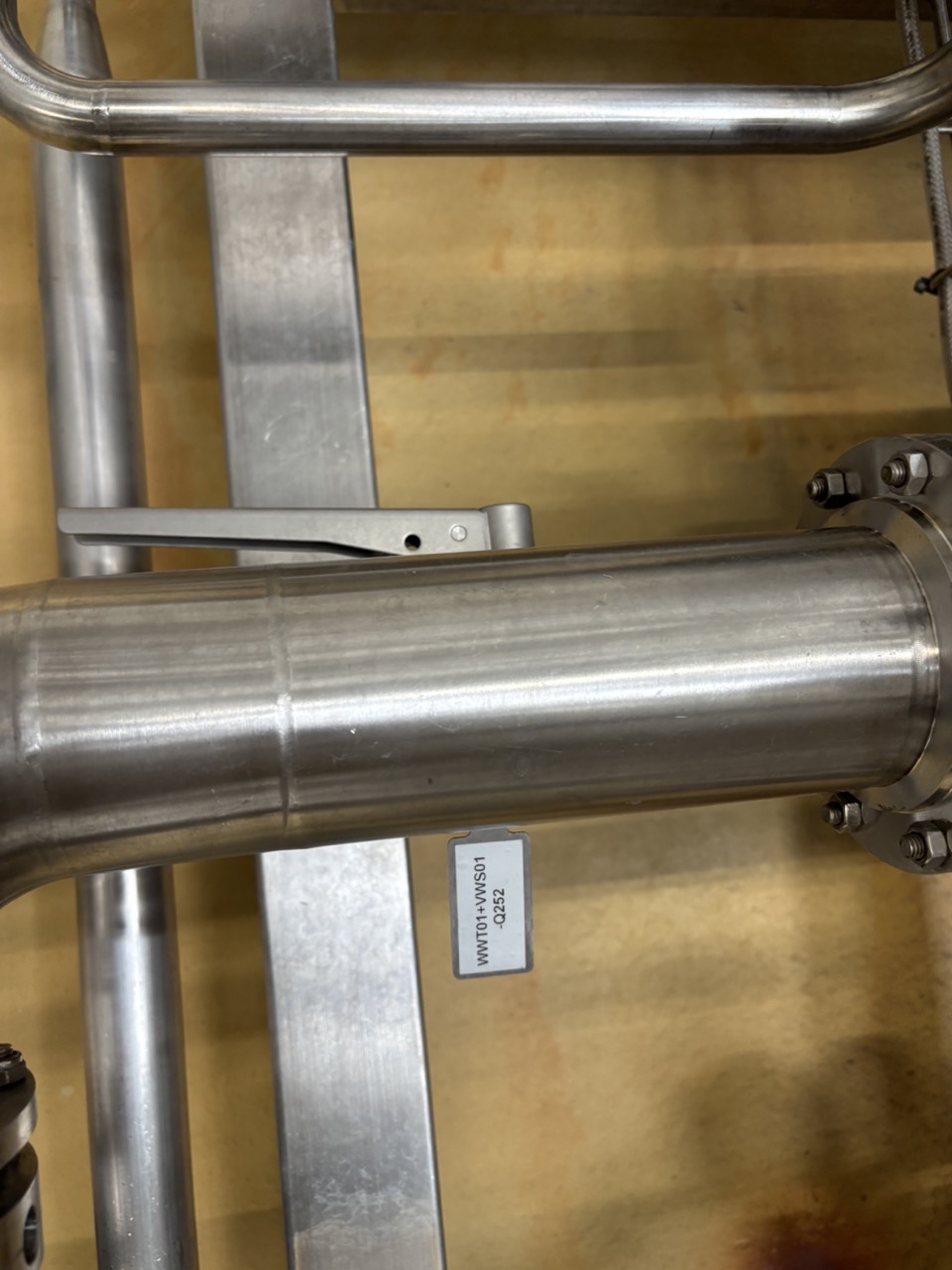
- Open the butterfly valve (WWT01+VWS01-Q252) before the HLT pump and allow the tank to drain completely.
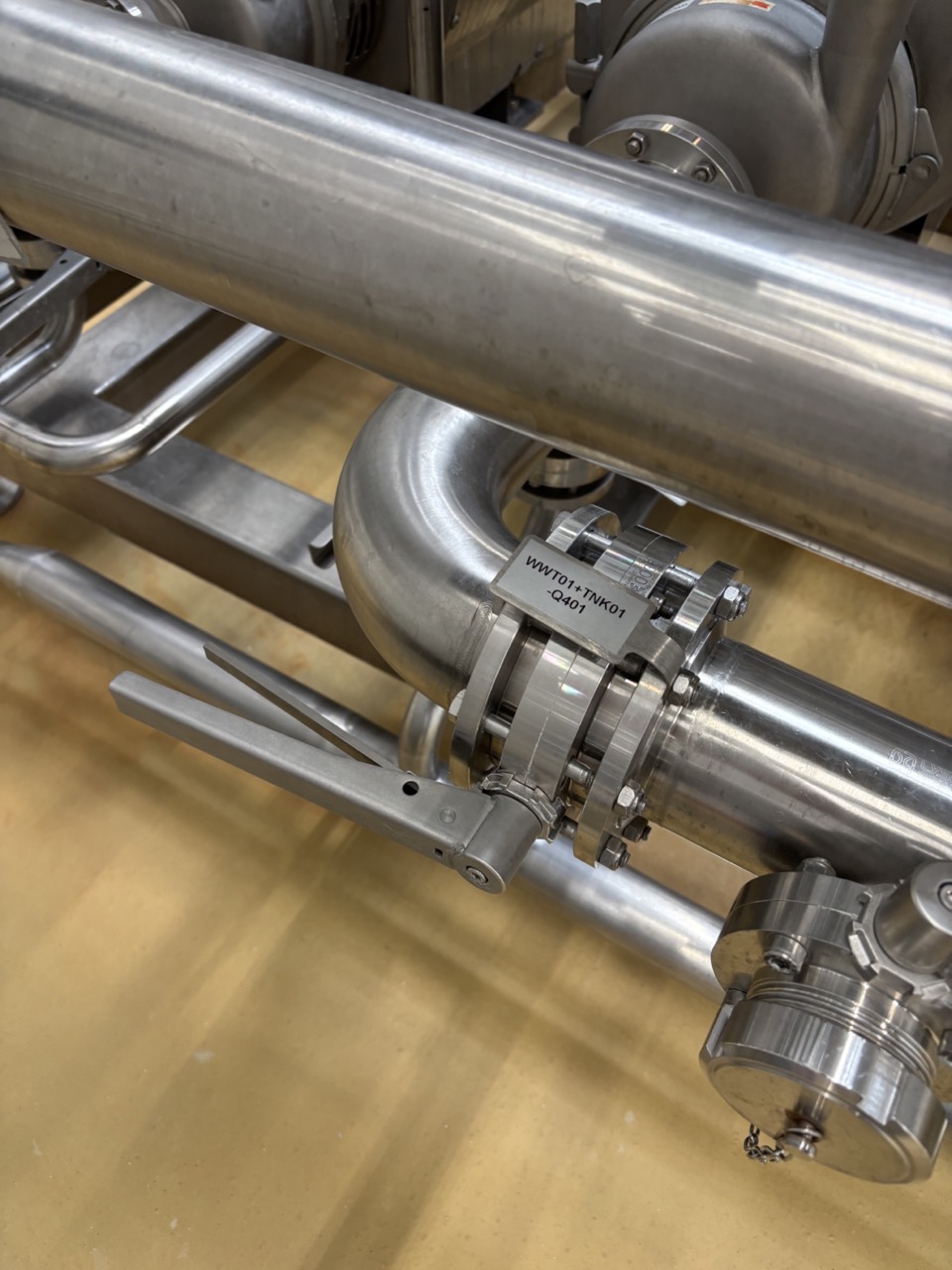
- Once the tank is fully drained, close valve (WWT01+VWS01-Q401) as well.
3. Assemble CIP Circuit
Connect in the following order:
- CLT water connection (CWT01+TNK01-Q251) → DN40 hose → pump inlet
- Dosing tank → DN25 hose → T-piece on pump inlet (small line)
- Pump outlet → DN40 to DN25 reducer → DN25 hose → CIP connection on the HLT
4. Pre-Rinse — 3 × 15 Seconds
- Open the CLT water connection. Allow the pump to fill with water and prime.
- Turn on the pump for 15 seconds and allow water to flow to the HLT and to drain. Turn off the pump.
- Repeat for a total of 3 cycles.
- Close the pump delivery butterfly between cycles to avoid pressure shocks.
5. Prepare and Send Acid Solution
- While the last rinse cycle is draining, fill the dosing tank with water by opening the T-piece valve to the dosing tank.
- Once filled, close the CLT butterfly valve.
- Add 2 L of acid (IC 3002) to the dosing tank.
- Send the acid solution into the HLT using the pump. Reduce the pump flow as the dosing tank nears empty to avoid vortexing and pump cavitation.
- Refill the dosing tank with water and send that into the HLT as well to fully chase the acid into the tank.
6. Switch to Recirculation
- Disconnect the DN40 hose from the CLT connection.
- Connect it to the HLT recirculation outlet (WWT01+TNK01-Q251).
- Turn on the pump and confirm flow is moving through the tank.
- Recirculate for 30 minutes.
- After 30 minutes, stop the pump and allow the solution to soak as long as possible.
7. Visual Inspection
- Use the ladder to access the top of the HLT.
- Open the manway using the wrench. Take care with the manway gasket.
- Inspect the interior with the flashlight.
- Close the manway securely once inspection is complete.
Warning
Improper closing of the manway may result in injury when the tank is pressurised. Double-check the seal before leaving.
8. Drain and Rinse
- If the tank passes visual inspection, drain the acid solution the same way as step 4 (water drain steps).
- Reconnect the hose to the CLT. Rinse the HLT with 3 × 15-second bursts as in step 4.
- Check conductivity of the rinse water at the drain outlet — target < 0.15 mS.
- Repeat rinsing if conductivity is still above target.
Note
If the tank does not pass visual inspection after cleaning, see troubleshooting below.
9. Return to Service
- Close all drain valves. Reopen valves for normal HLT operation.
- In Botec, re-engage the HLT recipe. Fill the HLT to the required volume for the next production cycle.
- Enable heating if steam is available.
- Note the cleaning on the production schedule document — record the date so the next annual clean can be scheduled.
Checklist
- [ ] HLT placed in Stop mode and Unit active disabled in Botec
- [ ] Pump power disconnected
- [ ] Filter butterfly valve (Q402) closed
- [ ] HLT drained via butterfly valve (Q252)
- [ ] Drain valve (Q401) closed after draining
- [ ] CIP circuit assembled: CLT → pump → dosing tank T-piece → HLT CIP connection
- [ ] Pre-rinse: 3 × 15 s, pump on, water to drain
- [ ] 2 L acid (IC 3002) added to dosing tank and sent to HLT
- [ ] Dosing tank refilled with water and chased into HLT
- [ ] Hose switched to recirculation outlet (WWT01+TNK01-Q251)
- [ ] Recirculated 30 min, flow confirmed
- [ ] Soak completed
- [ ] Visual inspection — manway opened, interior checked with flashlight, manway closed securely
- [ ] Acid drained
- [ ] Rinse: 3 × 15 s bursts, conductivity < 0.15 mS confirmed
- [ ] HLT returned to service in Botec
- [ ] Cleaning noted on production schedule
Troubleshooting
| Issue | Likely Cause | Action |
|---|---|---|
| Tank still soiled after cleaning | Heavy scale buildup | Repeat recirculation, extend soak time, or increase acid concentration. If unresolved, discuss with team. |
| Conductivity above 0.15 mS after rinse | Insufficient flush volume | Continue 15 s burst cycles until target is reached. |
| Pump cavitating | Dosing tank empty or not primed | Turn off pump. Refill and re-prime before restarting. |